| Karen Ryce Presents... |
| ||||||||||||||||||||||||||||


|


| Happy Kids Newsletter Month Ten There are images in the actual Newsletter that cannot be added here, but some of the links are active. |
| Your Happy Kids Newsletter This is not another parenting method…this is your missing foundation…the fundamentals that simplify parenting, answer the questions that worry you…keep you up at night…trouble your heart and mind. These fundamentals help you to use any parenting methods…successfully. Sibling Conflict Resolution Here, as in so many conflict situations, the process of discovering mutually agreeable solutions involves valuable, peace-making skills: • making sure that communication is clear, • that the people involved understand each other accurately, • brainstorming for solutions, • and negotiating a win-win resolution to the conflict. It is helpful if issues are dealt with when the siblings are not engaged in conflict, though these tools can certainly help resolve conflicts while they are happening. Understanding Why They Fight Often sibling conflicts occur because one of the children does not feel they are being heard, or that their needs are being considered. Another common cause of conflict is misunderstanding. They haven’t accurately understood each other. Talking individually with you about the situation gives each one a chance to feel accepted for who they are and what their needs are. To help this happen, it is important that you do what is called “active listening.” Mostly you just listen to what they are saying. Do your best to understand their side of the story, asking questions for clarification if necessary, “So you thought that she wanted you to do that, but now she says that she didn’t want you to?” This makes sure that you have understood them, and helps them be clear in themselves about what happened. It is also a way of teaching the skills of clear communication. When they feel understood and accepted it is easier to understand and accept the needs of other, and to discover mutually agreeable solutions to problems. As the siblings become more familiar with this method of resolving conflict in ways that are agreeable to everyone involved, not only do they use it spontaneously on their own, but conflicts happen less frequently. Instead of getting into conflict over something, they go right into negotiating. Also, as they become more skilled negotiators, it takes less time to negotiate. Peace in the home increases. When They Are Already Fighting! If they are already fighting, and it doesn’t really bother you, just ask if anyone wants your help. If they do, they usually begin telling their side of the story immediately. If you are uncomfortable with their fighting, let them know and offer to help them sort it out so they can both feel good about that’s going on. If they don’t want your help, you might ask for their help. Tell them that you have a problem with their fighting; let them know how it makes you feel. Ask them if they would help you find a solution to your problem. Then brainstorm, and negotiate. Sometimes fighting escalates into physical fighting. If that’s not okay with you, then put your body on the line and stay between them until you all come to some mutually acceptable agreement. If they do want your help, it helps to first talk with each child separately; then you and they don’t have to deal with the dynamics of their relationship while they are sorting things out. It gives each child a chance to be heard, to say what they need and how they would like the situation to be resolved. Later when they meet together, they won’t be so emotional and their ideas will be clearer. If they already know how to find win-win solutions then they can do this on their own. If not, they will need your help as a facilitator until they have become sufficiently skilled. Keeping It Respectful In this column the reader is offered practical, respectful options leading to win-win solutions to the problems arising between adults and children in everyday life. If you want to ask a question use this link: Click Here to Ask Q: “I have two sons, ages five and two. They fight over everything. The youngest wants everything the oldest has. The oldest has to believe that everything he has is the best, better than his brother’s. He doesn’t hesitate to tell his brother this, “I have this and you don’t.” And I’m in there with, “Don’t fight. Stop Arguing. Stop fighting!” That usually ends it for a little while, but they keep making faces. I don’t like what any of us is doing.” C.A., Garberville A: Having a two year old as part of the equation makes this different than if your son was a different age. Because two year olds are very busy creating the components of strong and well-functioning will power: • the ability to want, • the ability to be determined, • the ability to persevere, • and putting all these abilities at the service of their intelligence, • it is impossible, or almost impossible for them to do anything that is contrary to this. If you work against this you’re doing a disservice to their development. You are either helping create someone whose will is broken, or you are helping create someone whose will becomes more powerful than it should. It is no longer teamed up with the intelligence and at the service of the inner being. The will takes over, and the person becomes arbitrary in their willfulness. They kind of get stuck at two years old, wanting just to be wanting, persevering just to persevere, being determined just to be determined. However, knowing this actually makes it easier to work with them. You can learn to help change the direction of a two year old’s will if you catch it early enough. Giving him opportunities to cooperate with you, telling him how much you appreciate his help when he does cooperate can be of great benefit to him as well as to you. Two year olds like to work and to be helpful, useful, needed. Be alert. Quickly offer him an alternative on which to practice his willing when what he first chooses does not agree with you. Once he becomes fixed on something, then the other practices come into play, being determined and persevering. At this point your suggestion has to be really attractive to him for him to change. Otherwise, it’s easier and more peaceful, if it’s possible for you to do this, to go along with him, looking for the first opportunity to change his direction. Remember, this period is very important in human development, it doesn’t last very long if he gets to do it properly. Though I know that it can seem eternal when you’re right in the middle of it. Make an appointment with your older son. Tell him that you are having a problem and you need his help to solve it. Ask if whatever time you have in mind for the talk would be okay with him. Tell him that you are going to arrange for his brother to be somewhere else. Before the meeting think out very clearly exactly how you would like the situation to be. Think out exactly what bothers you about the way things are going now. Then you will be able to explain this to him in ways that he can understand and relate to. Make sure you state clearly that their fighting is a problem for you. Don’t assume that it bothers them, though it may and he may say it bothers him, too. Be sure he gets a chance to share any feelings, thoughts, or needs that he has. Even if it doesn’t seem to relate, just getting the opportunity to be heard, understood, and accepted can make differences you might not imagine. Paint a verbal picture of how you would like things to be, and ask if he can help this happen for you. Also remember to have paper and pens handy for writing down brainstormed ideas. When you explain to him about brainstorming, be sure that he understands that even though you are going to write down all the ideas, only the ones that you both like will be used. When you’ve finished, ask him if he would like to explain these decisions to his brother. If he feels competent and capable in himself, he won’t need to have “better things” to bolster his ego. Power of Respect Question: What plans have you made to help your children resolve their conflicts? Click Here to Ask The Miracle Worker…of Education and Parenting: link (get your question answered in a future newsletter, you can also suggest topics you would like covered) Next Month: Dealing with “willful disobedience”… May your efforts be successful and satisfying. Best Wishes, Karen Ryce The Miracle Worker…of Education and Parenting We value your privacy and we’re not going to rent, trade, share or sell your information to anyone. If you want to read the details of the privacy policy, you can read them here. Contact Us | Privacy Statement Karen Ryce Presents Copyright © 2011, 2012, 2014 All Rights Reserved Karen Ryce Presents retains all copyrights in any text, graphic images, and software owned by Karen Ryce Presents and hereby authorizes you to electronically copy documents published herein solely for the purpose of transmitting or viewing the information. You may not mirror, modify or otherwise alter any files in this newsletter for rebroadcast, or print the information contained therein, without written permission from Karen Ryce. Except as expressly provided above, nothing contained herein shall be construed as conferring any license or right under any Karen Ryce Presents copyright, patent or trademark. All transmissions of any of the information in this newsletter must include this paragraph and the following link: http://www.happykidsco.com |
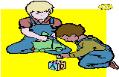
| Kids Fighting?... Formula • Prepare for this by letting the children know about finding solutions that everyone likes • Practice this frequently, consistently in your family. It helps prevent fighting, besides helping everyone have a good time • Tell them that if you hear them fighting you plan to ask if they want help to find a solution that’s good for everyone involved • When you hear fighting, go ask the children if anyone needs some help • You are not trying to work things out for them. You are helping them acquire the tools they need to solve their own problems…so they all get to feel good • If one of them asks for help, and this is very likely, ask what they need help with • Keep calm and respectful • Listen and try to understand • Remember there is always more than one side to any story • Keep communication clear, reflect back to them in your own words what you believe they said to you so that: o They can realize that you are paying attention o They can tell you if you are correct or not • After you have heard both sides, explain how the situation seems to you • Remind them that they both deserve to feel good • Ask if they would like help to find a solution they both like • If they want help, go through the Spontaneous End Conflict NOW! o Help them go through this together o Help them go through this one-by-one o Help them go through this one-by-one and then together |


| Respect Dissolves Resistance • Remember to keep calm, respectful and patient • Patience is essential in this situation • Respect helps them feel safe, so keep being respectful • Be understanding and compassionate • Be persistent about what you want and need but don’t overwhelm them with requests • You don’t want to make them more resistant • When they want something from you, you could trade them to drop their resistance • Or you can wait until they approach you on their own. That is the most powerful way to have them release their resistance |


| Video To Help You End Conflicts Imagine your home with no conflicts…everyone is getting along, helping each other…this doesn’t mean there are no differences in opinion, values, interests, needs…but you now have the means to harmonious solutions and each of you know this, believe in it, practice it and reap the benefits… Imagine your kids demonstrating the dominant, positive results that I have witnessed in kids due to the Power of Respect which helps them reveal their true nature: • they are considerate; • they are capable; • they have strong, positive beliefs in their self-worth; • they make wise decisions; • they are respectful; This video also helps you when you are not feeling like being respectful. Check it out! |

| Raise Happy Kids Webinar Trailer Hi, I’m Karen Ryce! And today I am here to help you. To help you know what you need to raise your happy child. Imagine…your family: everyone getting along…getting their needs met…helping each other… enjoying each other…all of you feeling connected, loved, understood, important and you all know how to create this state of well-being and how to maintain it, so that problems don’t develop between family members. I’ve put over 43 years of work into creating this proprietary system, Raise Happy Kids. I’ve used it successfully for years, as have others who have learned it from me. I also want to remind you that nothing is being sold on this webinar. I have offered to help you, and help is what you are going to get. By the end of this webinar, you will know what to do to raise happy kids. So be sure to take good notes. Today I am sharing the milestones that you pass as you use Raise Happy Kids to raise your happy kids. These milestones include: • The Power of Respect Mindset. • The importance of self-respect, as you are learning to be respectful to your kids. • The four-step formula for change, to help you dissolve the Invisible Root Cause • A very powerful strategy to end conflict in your family • Your role as a model for your kids (we don’t really go into that today) and finally • The special skills necessary to be respectful to a two year old, making it easier to live with them. At the end of the webinar I explain how you can apply to work with me. Click Here To Watch The Webinar, Raise Happy Kids! |
| What if it’s cold outside? I can’t tell them to put on a jacket? You can tell them, but if they don’t want to, I suggest allowing them to go out without it. Tell them that if they feel cold they can come get their jacket. If you are going with them you can bring the jacket along. Then when they experience the cold for themselves, they might want to put the jacket on. If this is a problem for you, have a meeting with them. Work out a win-win solution about them wearing a jacket. |

 | |  | |  | |  | |  | |  |